


Most homeowners think “under contract” is just a status change.
It is not.
Under contract is the point where preparation meets buyer confidence. It is where pricing, presentation, negotiation, and market timing come together. It is also where many sellers start to realize that the old way of selling a home is no longer enough.
A sign in the yard is not a strategy. A few photos online are not a plan. And hoping the right buyer appears is not the same as positioning a property with purpose.
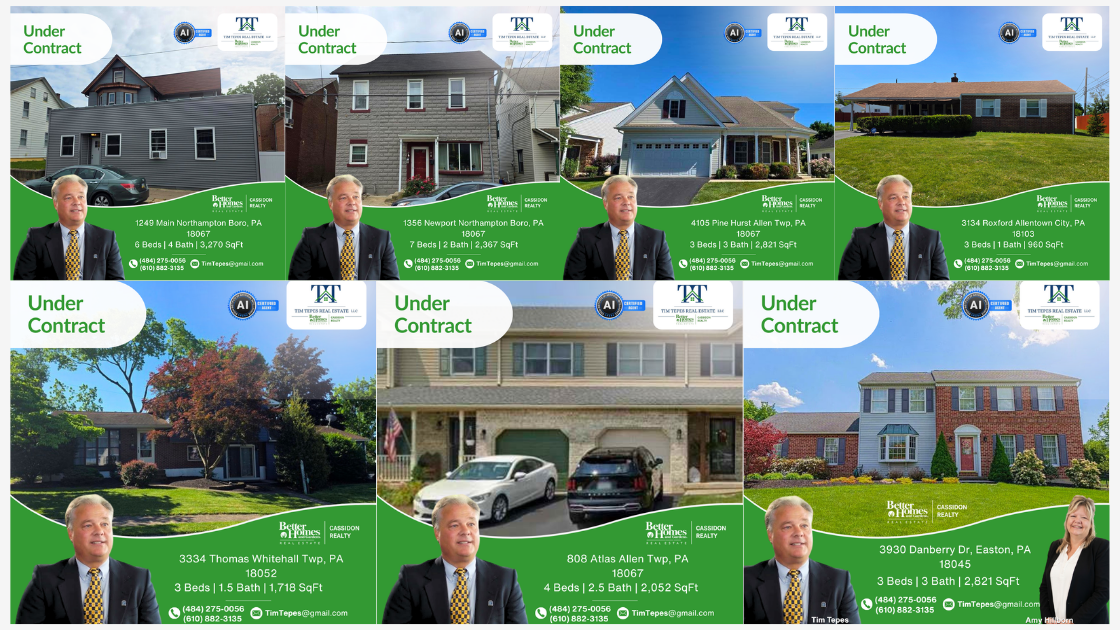
Tim Tepes currently has seven under contract results connected to his real estate activity across the Lehigh Valley market. These include:
- 1249 Main Street, listed at $475,000
- 1356 Newport Avenue, listed at $359,900
- 4105 Pine Hurst Drive, listed at $419,900
- 3134 Roxford Road, listed at $249,900
- 3334 Thomas Street, listed at $349,900
- 808 Atlas Road, listed at $400,000
- 3930 Danberry Drive, Easton, PA 18045, where Tim represented the buyer with Amy Hillborn
These properties were not all placed under contract at the same exact time. That matters. It shows consistency, not coincidence.
For sellers, buyers, downsizers, move-up homeowners, and investors, this type of activity sends a clear message: the Lehigh Valley real estate market is still moving when the right strategy is in place.
Under contract means a seller has accepted an offer, but the transaction has not yet closed. The home is no longer fully active in the same way, but important steps still remain before settlement.
Those steps may include:
- Inspections
- Mortgage approval
- Appraisal review
- Title work
- Final negotiations
- Closing preparation
For a seller, going under contract is a major milestone. It shows that buyers responded to the property, the pricing made sense, and the negotiation reached a workable agreement.
For a buyer, it means they successfully secured a position on a property in a market where well-prepared homes can still draw serious attention.
Key takeaway: Under contract is not luck. It is often the result of clear pricing, strong presentation, careful communication, and experienced guidance.
Seven under contract properties matter because they reflect active buyer demand across different price points and property types. When homes from the mid-$200,000s to the upper-$400,000s are moving forward, it shows that buyers remain engaged when value is clear.
The listed properties range from $249,900 to $475,000, which speaks to a broad section of the Lehigh Valley real estate market. That activity is relevant for several types of clients:
- Move-up sellers who want to use equity toward their next home
- Downsizing homeowners who need a careful plan before making a change
- Traditional sellers who want accurate pricing and strong representation
- Investors watching demand, timing, and property movement
- Strategic buyers who need guidance in a competitive setting
The market is not frozen. It is selective.
That is the difference many homeowners miss. A selective market does not reject all listings. It rewards the listings that are positioned correctly.
Yes, the Lehigh Valley real estate market remains active for homes that are priced, prepared, and represented with care. Buyer behavior may be more thoughtful than in past years, but serious buyers are still taking action.
Many homeowners have been told to wait. Wait for better rates. Wait for spring. Wait until the market feels easier.
But waiting without a strategy can cost time, opportunity, and negotiating power.
Here is the truth: buyers do not stop wanting the right home. They simply become more selective about value.
That means sellers need more than a listing. They need a plan that answers buyer questions before those buyers ever step through the door:
- Is the price supported by recent market activity?
- Does the property show well online?
- Are the photos, description, and marketing clear?
- Does the home feel worth the showing appointment?
- Is the agent prepared to negotiate from a position of knowledge?
When the answer is yes, homes can still move.
Sellers can learn that results come from preparation, pricing discipline, and strategic exposure. Each under contract property represents a decision-making process that began before the offer arrived.
A strong selling plan starts with four essential questions:
- What is the property truly worth in today’s market?
Not last year’s market. Not a neighbor’s wishful number. Today’s buyer pool decides value through action. - How should the property be presented?
Buyers form opinions fast. Photos, remarks, condition, layout, and showing access all affect response. - What is the pricing strategy?
Pricing too high can create delay. Pricing with precision can create stronger buyer interest and better negotiating leverage. - Who is managing the process?
Experience matters when offers, inspections, appraisals, and timelines need steady judgment.
The old belief says, “Any agent can list a home.”
The better belief is this: the agent you choose can affect your price, your stress level, your timing, and your final outcome.

Pricing matters because buyers compare every home against competing options, recent sales, interest rates, condition, and perceived value. A home can be beautiful and still sit if the price does not match the market.
Accurate pricing does not mean giving the home away. It means entering the market with a number that creates confidence.
For sellers, strong pricing does three things:
- It attracts the right buyers sooner
- It reduces unnecessary days on market
- It supports stronger negotiation when an offer arrives
A thoughtful pricing strategy also protects the seller’s position during appraisal and inspection phases. Getting under contract is important, but staying under contract matters just as much.
Tim Tepes brings more than three decades of real estate experience to this process. His background in business, architecture, negotiation, and local market leadership gives clients a clearer view of both the numbers and the property itself.
That perspective matters when the goal is not just activity, but a result.
Presentation influences buyer decisions by shaping the first impression before a showing is ever scheduled. In today’s market, buyers often decide whether a home is worth seeing based on how it appears online.
Presentation includes more than photography. It includes:
- Property preparation
- Accurate feature descriptions
- Clear listing remarks
- Strong visual order
- Practical showing strategy
- Buyer-focused messaging
- Consistent follow-up
A home should be presented with honesty and care. Overstatement weakens trust. Clear property strengths build confidence.
For example, a seller does not need exaggerated language. They need the right buyer to understand why the home matters:
- A low-maintenance layout
- A convenient location
- Updated systems
- Functional living areas
- Quality craftsmanship
- Outdoor space
- Storage
- Commuter access
- Proximity to shopping, parks, or daily amenities
When buyers can picture how the property supports everyday living, they are more likely to take the next step.

For move-up sellers, these under contract results show that equity can still be put to work when the sale is planned correctly. Many homeowners want more space, a different layout, an updated home, or a location that better fits their current priorities.
The challenge is timing.
Selling and buying at the same time requires more than enthusiasm. It requires coordination.
A strong move-up strategy should address:
- Your current home’s realistic market value
- Your likely net proceeds
- Your next purchase price range
- Financing options
- Timing between sale and purchase
- Contingency planning
- Negotiation structure
This is where experience becomes practical. A move-up seller needs someone who can see both transactions at once and protect the client from unnecessary pressure.
The dream is not simply selling. The dream is moving forward with confidence, knowing the numbers make sense and the process is being handled with care.
For downsizing homeowners, under contract activity confirms that well-positioned homes remain valuable to today’s buyers. Many downsizing clients have owned their homes for years. The decision to sell can feel both financial and personal.
There may be memories attached to every room. There may also be a clear desire for less upkeep, fewer responsibilities, and a home that better supports the next chapter.
A downsizing plan should be respectful, organized, and realistic.
Important questions include:
- What updates or repairs are worth considering before listing?
- What should be handled before photography?
- What is the likely sale range?
- What timeline feels manageable?
- What belongings, documents, or services need to be coordinated?
- What type of next home makes the most sense?
Selling a long-held home is not only a transaction. It is a transition. The right guidance can reduce uncertainty and help the seller move at a pace that feels controlled.
For buyers, the 3930 Danberry Drive transaction in Easton shows the value of experienced buyer representation. When Tim Tepes represented the buyer with Amy Hillborn, the role was not simply opening doors. It was helping the buyer understand value, timing, contract terms, and the path toward settlement.
Strategic buyers need clear advice because the best homes do not always wait.
A buyer agent helps with:
- Market comparison
- Offer structure
- Inspection terms
- Communication with the listing side
- Timeline management
- Risk review
- Settlement preparation
In an active market, buyers need both speed and discipline. Moving too slowly can cost an opportunity. Moving too quickly without guidance can create risk.
The right representation helps balance both.
Sellers should pay attention before they list because the strongest results are often created before the home reaches the market. The first impression is difficult to redo.
A seller who wants a strong outcome should not begin with the question, “What can I get?”
The better question is, “What strategy gives my home the strongest position?”
That strategy may include:
- Reviewing comparable sales
- Studying current competition
- Preparing the property for photos and showings
- Writing clear and accurate listing copy
- Launching with strong visual presentation
- Monitoring early buyer response
- Adjusting only when the data supports it
- Negotiating with calm, experienced direction
This is the core message: homes do not sell well by accident. They sell well when strategy, preparation, and representation work together.

Tim Tepes helps sellers by bringing market knowledge, pricing discipline, property insight, and steady negotiation experience to every listing. With more than 33 years in real estate, Tim understands that every seller’s situation is different.
A move-up seller may need speed and equity protection.
A downsizing seller may need patience and a step-by-step plan.
An investor may need numbers, timing, and asset performance.
A traditional seller may need clarity, trust, and a direct path to the strongest possible result.
Tim’s approach is built around professional advice, accurate analysis, and a commitment to better outcomes.
He also uses his A.I. Listing Advantage to help sellers position their homes with stronger marketing insight, clearer presentation, and smarter exposure. Technology matters, but the human judgment behind it matters more.
That is where Tim’s experience creates value.
The obvious next step is to get expert advice before making a major real estate decision. Whether you are thinking about selling now, preparing for a future move, or simply wondering what your home could be worth, the right conversation can give you clarity.
You do not need to guess.
You do not need to rely on outdated assumptions.
You do not need to wait until the market feels perfect.
You need a professional evaluation of your home, your goals, your timing, and your best strategy.
Seven under contract results are not just numbers on a screen. They are proof that buyers are still acting, sellers are still moving, and strong representation still matters.
If you have been wondering whether now is the right time, this may be your signal to get the facts.
Considering a sale, a move-up purchase, a downsizing transition, or an investment decision in the Lehigh Valley?
Let’s look at the numbers, review your options, and build a strategy that fits your goals.
Call TTT Tim Tepes Today to discuss your next move.
Tim Tepes
Phone: 484-275-0056
Email: [email protected]
Nobody Knows Homes Better. Better Service. Better Results. Call TTT Tim Tepes Today. Expect Better.
What does under contract mean when selling a house?
Under contract means the seller has accepted an offer, but the sale has not closed yet. Inspections, financing, appraisal, title work, and final settlement steps may still need to be completed.
Are homes still selling in the Lehigh Valley?
Yes. Homes are still moving when they are priced correctly, presented well, and supported by strong representation. Buyer demand remains active for properties that show clear value.
Why is pricing so important before listing a home?
Pricing affects buyer attention, showing activity, offer strength, and appraisal confidence. A precise pricing strategy can help reduce delays and support better negotiation.
Should I sell before buying my next home?
That depends on your equity, financing, timing, and risk comfort. A move-up or downsizing plan should be reviewed before making a decision so you understand your best options.
How can Tim Tepes help me sell my home?
Tim provides market analysis, pricing guidance, listing preparation, negotiation support, and the A.I. Listing Advantage to help position your home with clarity and confidence.
Check out this article next