


What if the biggest mistake you could make when selling your home happens before the first buyer even walks through the door?
Many homeowners believe that setting a higher asking price gives them more room to negotiate. It sounds reasonable. Start high, see what happens, and lower the price if necessary.
But selling a home doesn't always work that way.
Your asking price does more than tell buyers what you want for your property. It shapes how they see its value, whether they schedule a showing, and how seriously they consider making an offer.
If you're thinking about selling a home in Bethlehem, Allentown, Easton, Northampton, or anywhere in the Lehigh Valley, understanding how pricing affects buyers can help you make a smarter decision.
The goal isn't simply to put a big number on your home. It's to create an opportunity for the right buyers to recognize its value.
A higher asking price doesn't guarantee a higher sale price because buyers compare your home with other properties they can purchase.
Imagine you're shopping for a home and find two houses in the same neighborhood. They have similar features, comparable living space, and roughly the same condition. However, one is priced noticeably higher than the other.
Which one would you want to see first?
Most buyers want to understand what makes a property worth its asking price. If they can't see a clear reason for the difference, they may move on.
That's why the highest asking price isn't always the smartest asking price.
Pricing a home above what comparable properties support can limit buyer interest. Instead of gaining negotiating power, you could end up with fewer opportunities to negotiate.
The important question isn't how much you can ask. It's how much qualified buyers are likely to pay based on the property's features and current market conditions.
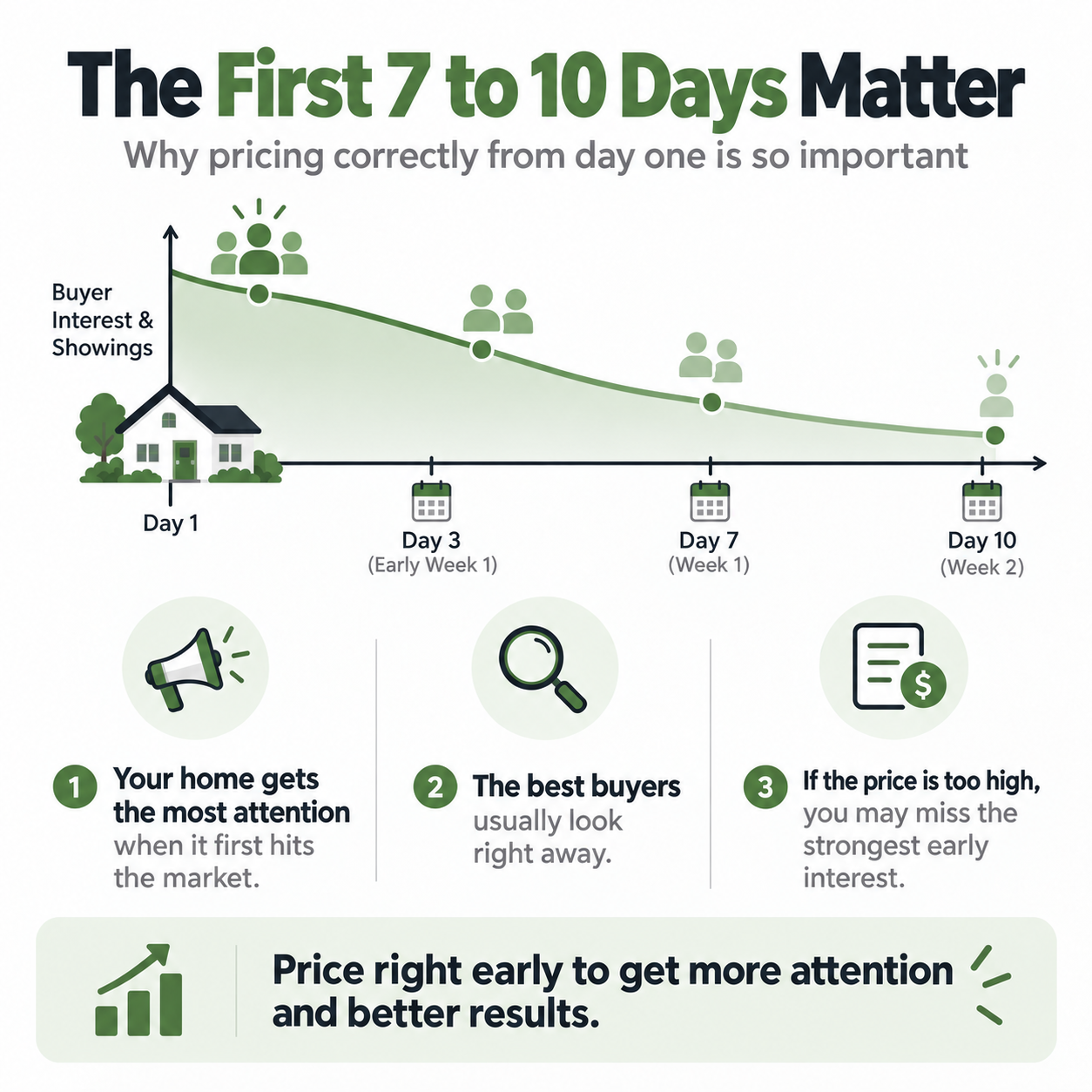
The first days on the market are important because your listing is new to buyers who have been searching and waiting for suitable properties.
Think about someone who has been looking for a home in Bethlehem for several weeks. They've seen the available listings, know their budget, and have a good idea of what they want.
When a new home appears that fits their needs, they'll likely take a closer look.
Your property has an opportunity to capture that attention when it first becomes available.
However, that doesn't mean every home must sell within a week. Market conditions, location, price range, property features, and competing listings all play a role.
The real advantage of a new listing is having a chance to make a strong first impression on active buyers.
A thoughtful launch includes an appropriate price, quality property photos, accurate listing details, and a marketing plan that reaches the right audience.
When these pieces work together, buyers have a clearer reason to schedule a visit.
Buyers judge a home's value by comparing its price, condition, location, size, and features with similar properties.
They aren't simply buying your square footage or the updates you've completed.
They're considering how the home fits their lives.
For example, one buyer may value a finished basement. Another may prefer a large yard, a home office, or a shorter commute.
While personal preferences differ, buyers often consider several practical factors.
Location: The neighborhood, nearby amenities, commute options, and surroundings.
Property condition: The home's maintenance, visible repairs, and overall appearance.
Recent comparable sales: What similar homes have actually sold for.
Available competition: Other homes currently listed in the same price range.
Layout and features: How the living space works for the buyer's needs.
Total cost: The mortgage payment, property taxes, insurance, and possible repairs.
In the Lehigh Valley, these factors can vary from one neighborhood to another.
A home in Allentown may face different competition than a similar property in Nazareth or Easton. Even within the same town, location and property details can affect what buyers are willing to offer.
This is why a broad online estimate isn't always enough to determine an effective listing price.
You need to understand how your particular home compares with the alternatives buyers are seeing today.
The right asking price is based on recent comparable sales, current competition, property condition, and local buyer demand.
Before choosing a number, I recommend looking at your home from the buyer's point of view.
A reliable pricing process includes four important steps.
1. Review Recently Sold Homes
Recent sales help show what buyers have actually paid for properties similar to yours.
A useful comparison considers location, size, condition, age, and important features.
2. Study Homes Currently for Sale
Sold homes tell us what buyers have paid. Active listings show what your property will compete against.
If buyers can choose a similar home at a more attractive price, your listing may need a stronger reason to stand out.
3. Consider What Makes Your Home Different
Maybe you've replaced the roof, remodeled the kitchen, or maintained the property carefully over the years.
These details can matter. However, the cost of an improvement doesn't always equal the amount buyers will pay for it.
The goal is to understand which features may add market value, not simply total up what you've spent.
4. Build a Strategy Around Your Goals
Are you hoping to move quickly? Do you need time to find another home? Is your priority maximizing your net proceeds?
Your answers can shape your selling strategy.
A good listing price should reflect both market evidence and your personal goals.
That's where local experience becomes especially valuable.
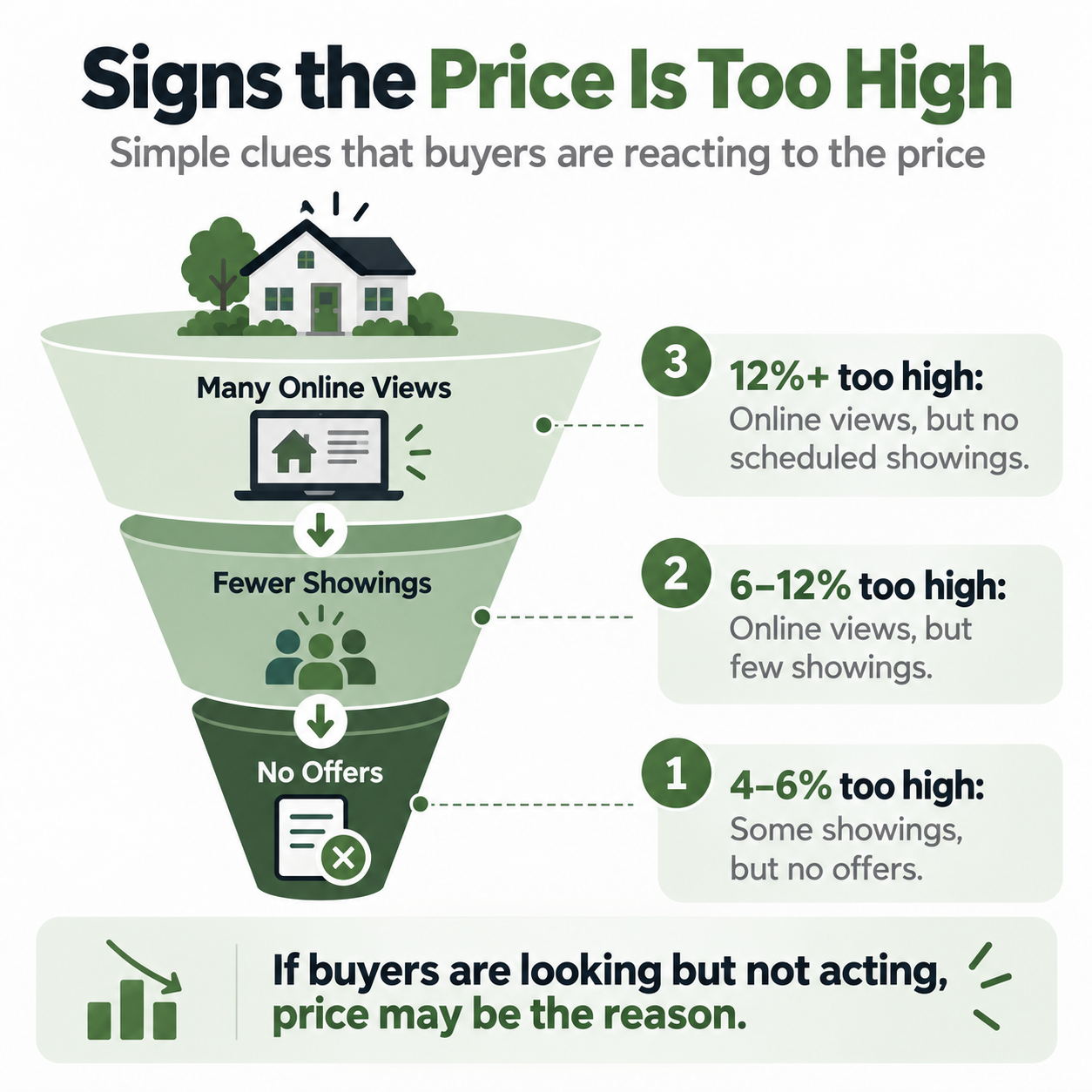
Your asking price may need attention when buyer activity is weaker than expected compared with similar listings in your market.
Here's something homeowners sometimes overlook.
A home can look beautiful online and still fail to attract serious offers.
Maybe people are viewing the listing but aren't requesting appointments. Perhaps buyers are touring the property but choosing other homes.
Those results are worth examining.
Here are three important signals to watch.
Plenty of online interest but few showings
Buyers may like the photos or features, but the price or another detail could be discouraging them from visiting.
Showings without serious offers
If people consistently walk through the property without taking the next step, they may see better value elsewhere.
Similar homes selling while yours remains available
When comparable properties attract buyers and your home doesn't, it's time to review how your listing compares.
These signs don't automatically prove that your home is overpriced.
Poor photos, limited showing access, property condition, and changing demand can also affect results.
That's why I believe in looking at the full picture before recommending a change.
The best pricing decisions come from evidence, not frustration.
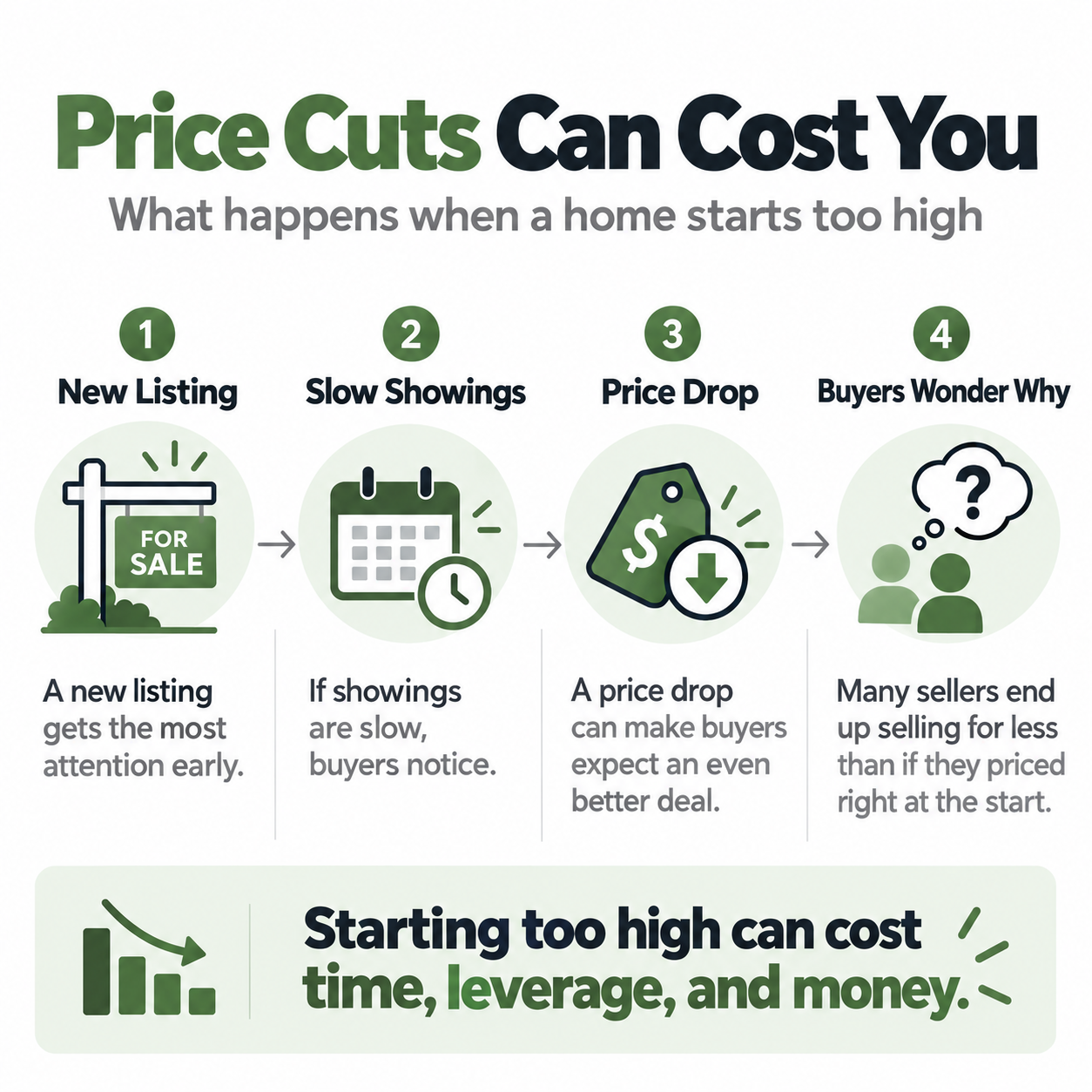
A price reduction may help when market feedback shows that buyers don't see enough value at the current asking price.
However, lowering the price shouldn't be your automatic first move.
Before making a change, it's important to ask what's preventing the home from attracting offers.
Is the listing reaching enough buyers? Are the photos presenting the home well? Have competing properties changed? Is the price supported by the latest comparable sales?
If price is the main issue, a well-planned adjustment may bring the property into a more competitive range.
But repeated reductions without a clear strategy can create uncertainty.
Consider a hypothetical example.
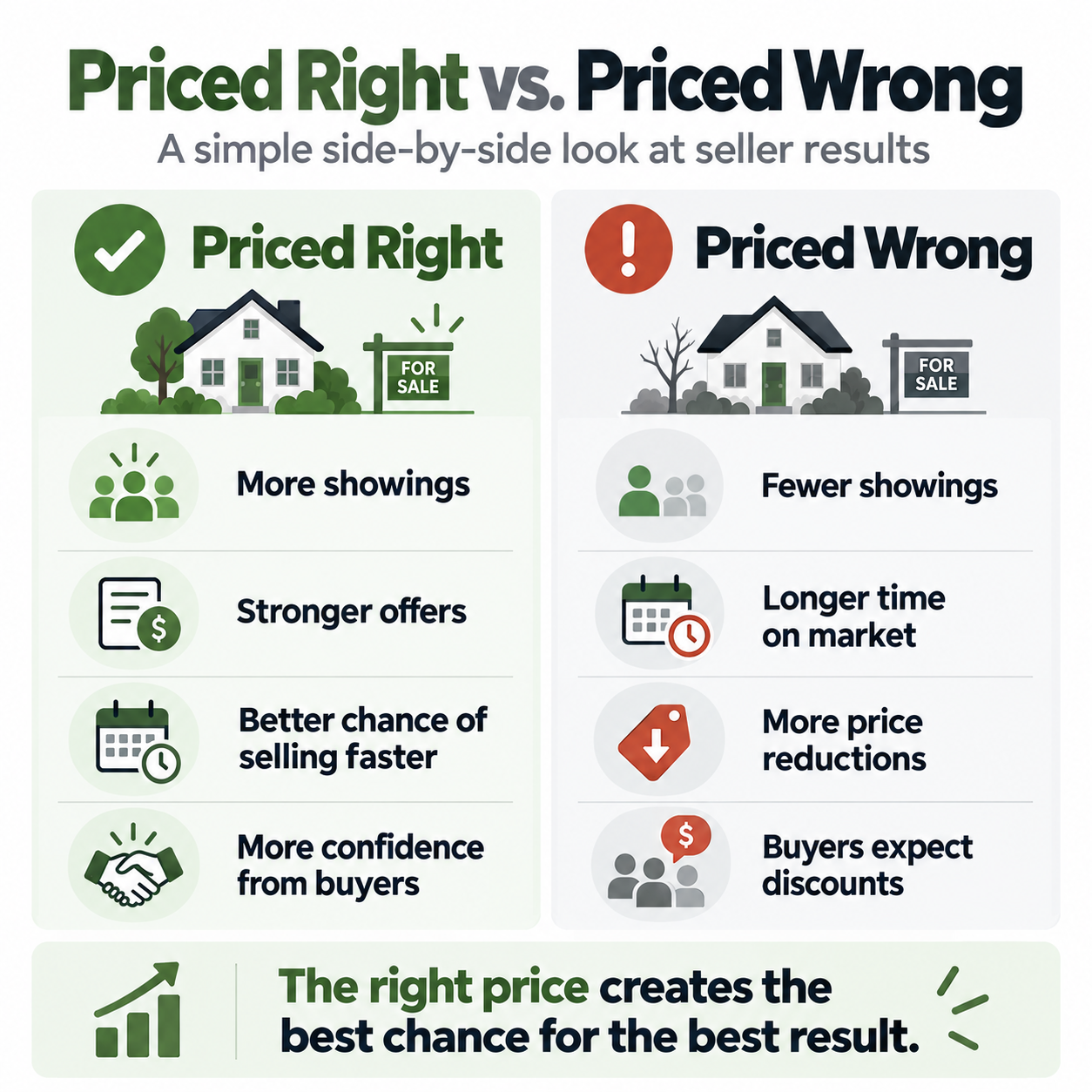
Two similar homes enter the market. One is priced based on recent comparable sales. The other starts significantly higher because the seller wants room to negotiate.
The first home receives serious attention. The second struggles to attract showings and eventually requires a price adjustment.
The second seller may still achieve a successful sale, but the process could involve extra carrying costs, more time, and difficult negotiations.
This example doesn't mean every overpriced home sells for less or that every accurately priced home sells quickly.
It shows why your initial asking price should be a deliberate decision rather than a test based on wishful thinking.
A local real estate professional can help you understand your home's competitive position, evaluate market evidence, and choose a pricing strategy that supports your goals.
Selling a home involves more than choosing a number.
You also need to prepare the property, attract qualified buyers, review offers, negotiate terms, and manage the transaction through closing.
When you're making decisions that could affect a major financial asset, experience and careful guidance matter.
I'm Tim Tepes, a Pennsylvania Licensed Associate Broker and REALTOR® with Better Homes and Gardens Real Estate Cassidon Realty.
With more than 36 years in real estate and over 700 documented transactions, I've worked with buyers and sellers throughout the Lehigh Valley and surrounding areas.
My approach starts with understanding your property, your priorities, and what current market information tells us.
That includes reviewing comparable sales, studying available competition, considering your home's unique features, and explaining the options in plain language.
I want you to understand the reasoning behind your pricing decision before your property goes on the market.
No guesswork. No unrealistic promises. Just practical advice backed by real estate experience and local knowledge.
What is the best way to price a home for sale?
Start with a comparative market analysis that reviews similar recent sales, active listings, your home's condition, and local buyer demand. Use those findings to choose a competitive asking price.
Should I price my home higher to leave room for negotiation?
Not necessarily. Pricing too high can discourage qualified buyers before negotiations begin. A price supported by market evidence is often a better starting point.
Can I rely on an online home value estimate?
Online estimates can provide a starting point, but they may not fully account for recent improvements, property condition, or differences between nearby neighborhoods. A local market analysis provides additional context.
Does pricing my home below market value guarantee multiple offers?
No. A lower price can attract interest in some markets, but multiple offers are never guaranteed. Demand, competition, condition, and marketing all influence the outcome.
How long should I wait before adjusting my asking price?
There isn't one perfect timeline. Review showing activity, buyer feedback, competing listings, and market conditions with your real estate professional before deciding.
Who can help me determine my home's value in the Lehigh Valley?
A local real estate professional who understands your neighborhood can prepare a comparative market analysis and explain how your home compares with current alternatives.
Make Your Next Move With a Clear Plan
Your home is more than a listing. It's a place where you've invested time, money, and memories.
When you're ready to sell, you deserve a pricing strategy that respects that investment while staying grounded in what buyers are willing to pay.
You don't need to guess what your home is worth or figure out the selling process alone.
Whether you're planning to move soon or simply exploring your options, I can help you understand your home's potential value and what it may take to compete in today's Lehigh Valley real estate market.
The next step is simple.
Contact me for expert advice and a personalized home pricing discussion. We'll look at your property, talk about your goals, and explore a selling strategy that makes sense for you.
Tim Tepes | PA Licensed Associate Broker and REALTOR®
Better Homes and Gardens Real Estate Cassidon Realty
Call or Text: (484) 275-0056
Email: [email protected]
Website: https://www.timtepes.com
Let's find the right strategy for your next move.
Check out this article next