



The holidays bring families together. There is good food, familiar faces, plenty of laughter, and usually at least one conversation about real estate.
Maybe it happens over Thanksgiving dinner. Maybe someone brings it up while exchanging Christmas gifts.
Then comes the question that seems to be on everyone's mind:
"Are home prices going to crash?"
Your brother thinks prices are too high. Your neighbor says interest rates will force prices down. Someone else insists we are heading toward another 2008 housing crisis.
Before you know it, everyone at the table has become a real estate expert.
But here's something worth remembering: A headline about the national housing market doesn't necessarily tell you what's happening in your neighborhood.
If you own a home in Allentown, Bethlehem, Easton, Northampton, Whitehall, Nazareth, or anywhere in Pennsylvania's Lehigh Valley, understanding your local market matters far more than predicting the next national headline.
After more than 36 years helping buyers and sellers navigate changing real estate markets, I've learned one important lesson.
Successful real estate decisions are based on facts, preparation, and local knowledge, not fear.
A nationwide housing crash is not inevitable, and a significant decline in home prices should never be assumed simply because mortgage rates are elevated or homes have become expensive.
Home prices depend on several important factors, including housing inventory, buyer demand, mortgage rates, employment, affordability, and local economic conditions.
When people hear the word "crash," they often think of the 2008 housing crisis.
But today's housing market cannot automatically be compared to 2008.
The previous housing crisis involved widespread risky lending practices, excessive borrowing, and a major increase in distressed properties.
Today's market has different lending standards and a different mix of homeowners and mortgage obligations.
That doesn't mean home prices cannot decline. They absolutely can.
However, a market correction and a housing crash are two very different things.
A correction may involve slower price growth, longer selling times, more price reductions, or modest declines.
A crash generally involves a much larger and more widespread drop in property values, often accompanied by serious economic or financial problems.
Understanding that difference can help you avoid making an expensive decision based on unnecessary panic.

Home prices in the Lehigh Valley could decline if buyer demand weakens, housing inventory increases significantly, or economic conditions deteriorate.
Several factors deserve attention:
Mortgage interest rates: Higher borrowing costs reduce purchasing power and can cause some buyers to delay their home search.
Housing inventory: When more homes are available than buyers are willing or able to purchase, sellers face greater competition.
Employment conditions: Job losses and economic uncertainty can reduce housing demand.
Home affordability: When prices, property taxes, insurance, and mortgage payments exceed what buyers can comfortably afford, demand can weaken.
Property condition and location: Homes requiring significant repairs or priced above comparable properties may experience longer marketing times and larger price reductions.
These factors don't affect every community or property equally.
A well-maintained home in Northampton may attract a different buyer pool than an investment property in Easton or a luxury home in Upper Saucon Township.
That's why I always encourage homeowners to examine what is happening in their specific market rather than relying on broad predictions.
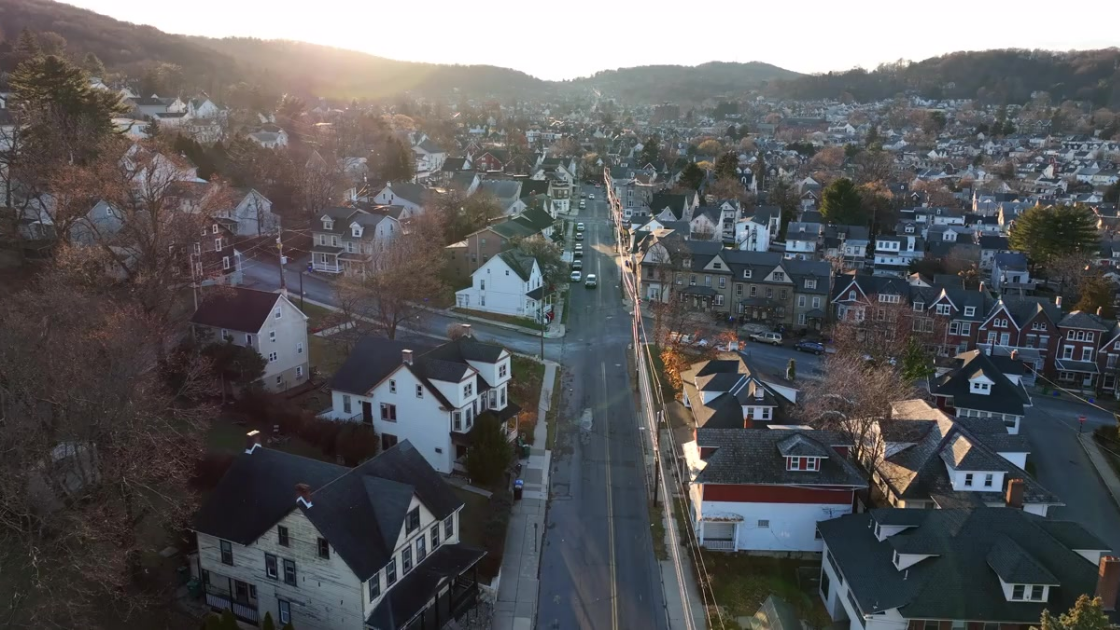
Yes. The Lehigh Valley is a regional housing market with its own supply, demand, employment patterns, property types, and neighborhood characteristics.
The Lehigh Valley includes communities throughout Lehigh, Northampton, and Carbon counties, each with distinct housing opportunities.
For example, buyers searching in Whitehall may prioritize shopping, transportation access, and established neighborhoods.
Buyers considering Nazareth, Bath, or Moore Township may be comparing different property sizes, lot characteristics, and housing styles.
Meanwhile, buyers in Bethlehem or Easton may be interested in historic properties, walkable downtown areas, or investment opportunities.
These differences influence pricing and demand.
A national report might indicate that home prices are declining in certain metropolitan areas. That doesn't automatically mean your home in Catasauqua, Allen Township, or Lower Macungie Township is losing value.
Real estate is local, and accurate pricing requires local evidence.
For a reliable picture of current conditions, I examine recent comparable sales, active listings, pending transactions, days on market, and the competition a property faces.
Those details tell us far more about a home's potential selling price than speculation at the holiday dinner table.
You should consider selling when the decision supports your financial goals, lifestyle, and future plans, not simply because someone predicts a housing crash.
Maybe you're thinking about downsizing.
Perhaps the children have moved out, and maintaining a larger property no longer makes sense.
You might be relocating for work, retiring, settling an estate, or looking for a home that better fits your needs.
Whatever your situation, the most important question isn't necessarily whether prices will rise or fall next year.
It's whether selling now makes sense for you.
Before deciding, consider three things:
Your home's current market value. What have comparable homes actually sold for recently?
Your estimated proceeds. After mortgage payoff, closing expenses, and other selling costs, how much equity could you receive?
Your next move. Will you purchase another home, relocate, downsize, or invest the proceeds elsewhere?
A well-planned sale can help you move forward with confidence, even when market conditions are changing.
Waiting for the perfect market can sometimes mean postponing the life you've been planning.

Waiting for a housing crash is a risky strategy because no one can reliably predict exactly when home prices or mortgage rates will reach their lowest point.
I understand why buyers hesitate.
Purchasing a home is one of the largest financial commitments most people will ever make.
Nobody wants to buy today and discover that a similar home sells for less next year.
But consider another possibility.
You wait for prices to drop. Mortgage rates decline, more buyers return to the market, and competition increases.
Suddenly, the home you hoped to purchase has multiple interested buyers.
On the other hand, if prices decline and borrowing costs remain high, your monthly payment may not improve as much as expected.
Instead of trying to predict the market perfectly, focus on what you can control.
Understand your budget, compare financing options, evaluate property condition, and choose a home that meets your long-term needs.
The right time to buy is when you're financially prepared, understand the market, and find a property that makes sense for your circumstances.

Real estate markets never stay the same forever.
I've been helping buyers and sellers throughout the Lehigh Valley since 1990.
Over those years, I've worked through changing interest rates, economic uncertainty, strong seller's markets, challenging buyer's markets, and periods when people questioned what would happen next.
I've also helped clients navigate more than 2,000 property transactions.
My background in real estate, business management, and construction provides an additional perspective when evaluating a property's condition, potential improvements, and market position.
As a past president of Greater Lehigh Valley REALTORS®, I've had the opportunity to serve the real estate profession and develop a deeper understanding of the communities we represent.
But experience isn't about claiming to know exactly what will happen tomorrow.
It's about knowing which questions to ask, what information matters, and how to help clients make informed decisions.
Whether you're selling a longtime family home, buying your first property, relocating, or evaluating an investment, you deserve advice based on your goals and the facts.
Start by replacing uncertainty with information.
You don't need to make a major decision today.
You simply need to understand your options.
If you own a home, find out what comparable properties are selling for and how your property competes in the current market.
If you're buying, understand your purchasing power and explore available homes without feeling pressured to rush.
If you're investing, evaluate rental income, operating expenses, financing costs, and long-term potential.
And if you're not planning to move anytime soon, remember that short-term market changes may have less significance when you intend to own your property for many years.
The goal isn't to predict every market movement. It's to make the best decision possible with the information available today.
The next time someone asks, "Are home prices going to crash?" around the holiday table, remember this:
Nobody can guarantee where home prices will go next.
But you can make smarter decisions when you understand your local market.
If you're wondering what your home is worth, whether now is a good time to sell, or if you should move forward with buying, I'd welcome the opportunity to help.
With over 36 years of local real estate experience, I'll provide straightforward guidance, explain your options, and help you develop a plan that fits your goals.
Contact Tim Tepes today for expert real estate advice throughout the Lehigh Valley.
Visit www.TimTepes.com to connect with me and start the conversation.
Nobody Knows Homes Better.
Better Service. Better Results.
Will home prices crash in 2027?
No one can reliably predict a housing crash in 2027. Future prices will depend on mortgage rates, available homes, buyer demand, employment, and local economic conditions.
Are home prices dropping in the Lehigh Valley, PA?
That requires current local sales data. Price trends can differ significantly between Allentown, Bethlehem, Easton, Northampton, Whitehall, and surrounding communities. Recent comparable sales provide the most reliable starting point.
Is a housing market correction the same as a crash?
No. A correction generally involves a slowdown or decline in prices, while a crash describes a much more severe and widespread drop in property values.
Should I sell my house before the market changes?
That depends on your equity, financial goals, property condition, and future housing plans. A local market evaluation can help determine whether selling now makes sense.
Is it better to buy a house now or wait?
Buying may make sense when your finances are stable, the monthly payment is affordable, and you plan to own the home long enough to support your goals. Waiting may be appropriate if you need more savings or financial flexibility.
How can I find out what my Lehigh Valley home is worth?
Contact Tim Tepes for a personalized home evaluation using comparable sales, current listings, property condition, and local market activity. Visit www.TimTepes.com to get started.
Check out this article next